
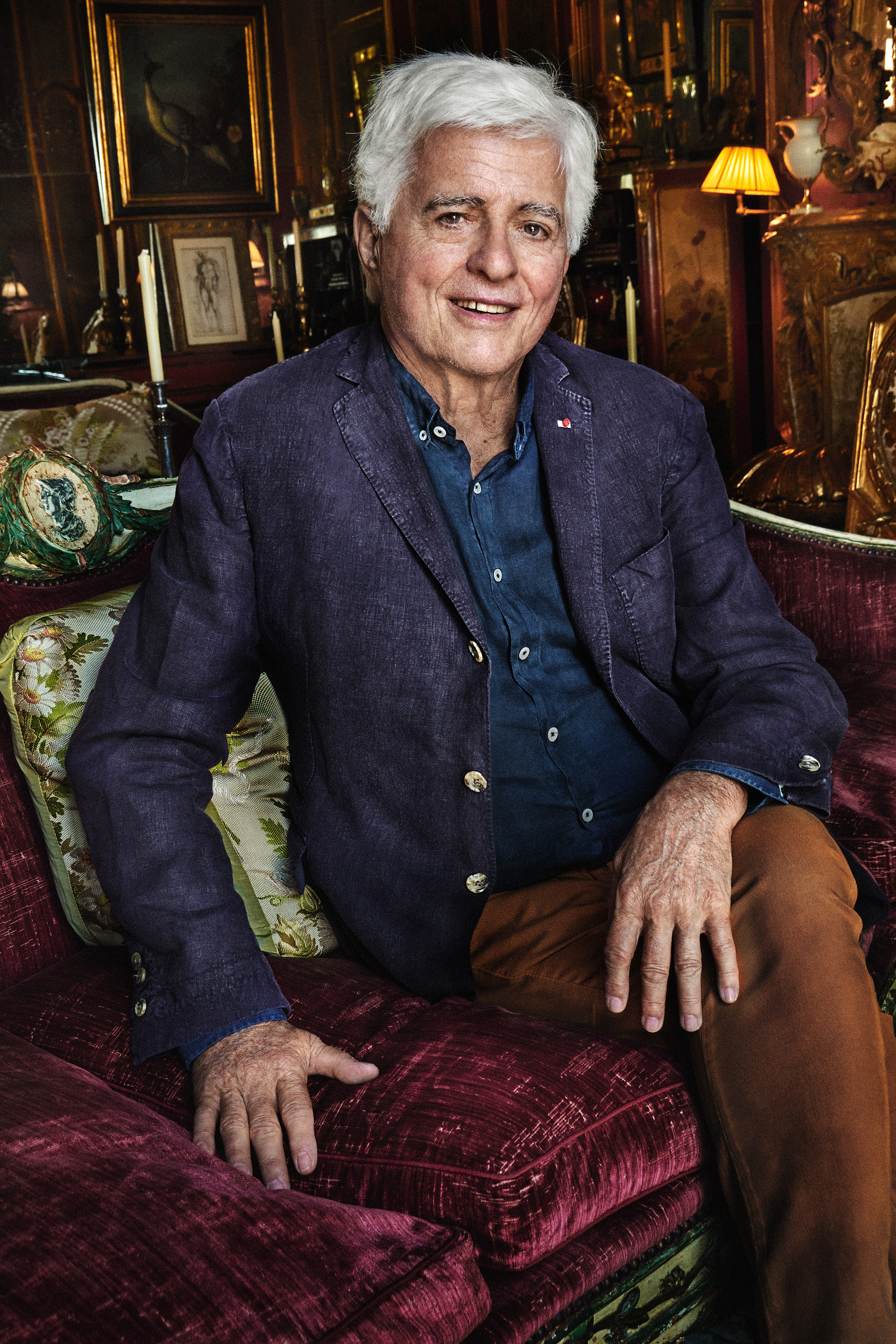
Jacques Garcia
Born in 1947 and trained at the prestigious Penninghen School in Paris, Jacques Garcia has spent decades redefining the visual language of luxury. His name is synonymous with a rare ability to blend historical opulence with modern intimacy, a talent that has drawn a distinguished clientele—from the Sultan of Brunei to legendary French dynasties like the d’Ornanno family.
Garcia’s influence on global hospitality is transformative. His long-standing collaboration with the Lucien Barrière Group reimagined the landscape of French elegance, with his masterful renovations of flagship icons including the Hôtel Royal and the Hôtel Normandy in Deauville, and the mythical Hôtel Majestic in Cannes.
However, his most personal and profound achievement is the decade-long restoration of Château du Champ de Bataille. Acquired in 1992, this 17th-century French masterpiece in Normandy serves as the ultimate showcase of Garcia’s genius. Within its drawing rooms, galleries, and libraries, he has created a seamless blending of genres that breathes new life into classical heritage. The estate’s gardens, inspired by the legendary André Le Nôtre, represent one of the largest private landscaping projects of the 20th century—a living testament to a man who does not just design spaces, but crafts enduring legacies.
Photo Credit: Mario Testino
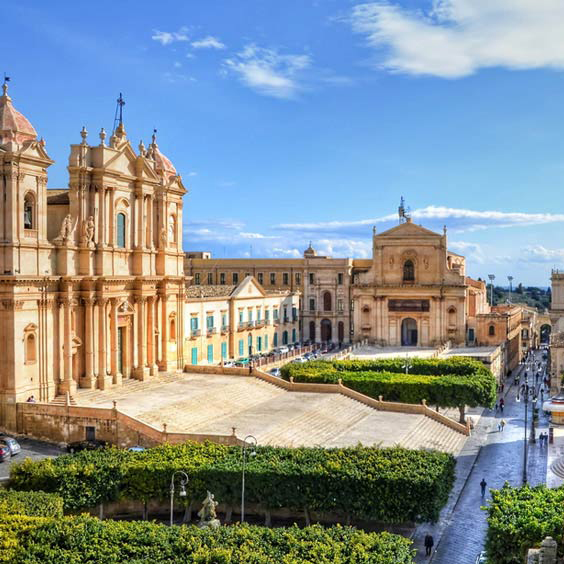
NOTO: The Capital of Sicilian Baroque
Noto is a UNESCO World Heritage site and the architectural centerpiece of southeastern Sicily. Rebuilt entirely after the 1693 earthquake, the city stands on a limestone plateau overlooking the Asinaro Valley, surrounded by citrus, olive, and almond groves.
The city’s identity is defined by its local honey-colored limestone. This porous stone absorbs the Sicilian sun, giving the facades a unique golden glow that shifts in tone from day to night. Noto’s streets are a deliberate display of 18th-century urban planning, characterized by monumental palazzos, ornate balconies, and grand churches.
Exploring the Val di Noto
Noto is a UNESCO World Heritage site and the architectural centerpiece of southeastern Sicily. Rebuilt entirely after the 1693 earthquake, the city stands on a limestone plateau overlooking the Asinaro Valley, surrounded by citrus, olive, and almond groves.
The city’s identity is defined by its local honey-colored limestone. This porous stone absorbs the Sicilian sun, giving the facades a unique golden glow that shifts in tone from day to night. Noto’s streets are a deliberate display of 18th-century urban planning, characterized by monumental palazzos, ornate balconies, and grand churches.